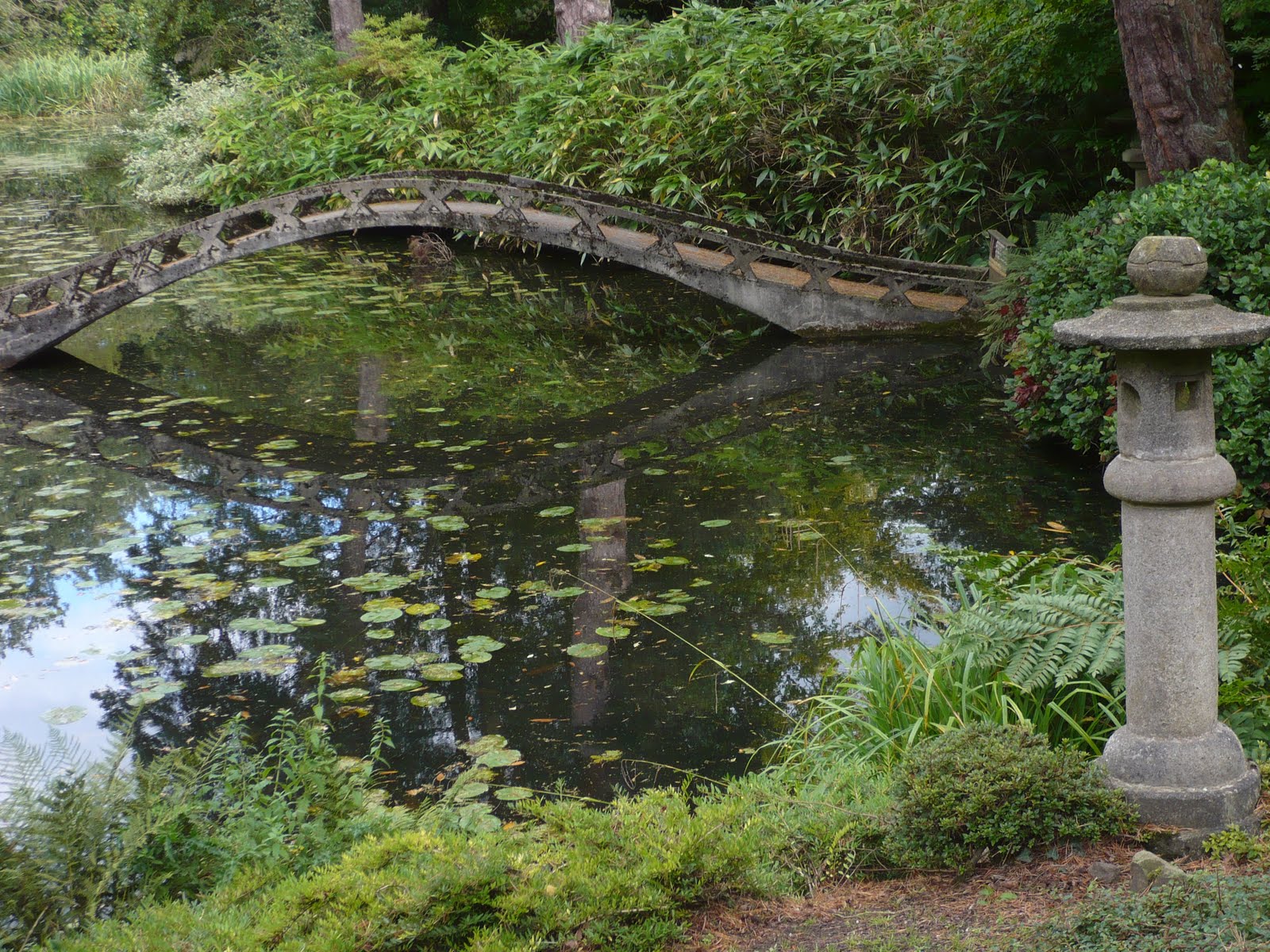
The start of the entrance path to the Japanese Garden at Tatton Park, Cheshire.
This garden was the result of a visit to the Anglo-Japanese exhibition at White City, London in 1910 which enthused many for this garden art. A team of
Japanese workers were employed and arrived at Tatton Park with, it is said, Shinto shrines and artefacts from
Japan.
There are three main types of Japanese gardens, Hill, Dry (sometimes known as Zen) and Tea. This one is built in the style of a Tea Garden which do not tend to the strict discipline of other two
Japanese Gardens but this one of course also has western influences
such as Acers/Maples which possibly do not appear in this type of garden in
Japan. The first signs of Autumn had just appeared when we visited on Friday.
Lanterns come in all shapes and sizes and have different functions
some are built to trap as much snow as possible so the scene looks beautiful in the winter. I would imagine the
juxtaposition of lantern and bridge covered in snow, perhaps the water iced over, would be wonderful.
A pond in a Japanese Garden of course always reminds of Basho's famous haiku:
The old pond
A frog jumps in
Sound of Water
(Basho)
my mind was still
till Basho's frog
made it ripple
(Wm Flygare)
But where does this bridge lead? In a traditional Tea Garden there would be stepping stones, and it would take you to
the Tea House. A stone lantern and a stone basin were placed where guests would purify themselves before participating in the tea ceremony. The aim of the Chaniwa (tea garden) designer is to create a feeling of solitude and detachment from the world, the latter being an element of Zen Buddhism. These type of gardens in
Japan are not typically open to the public
which by coincidence is similar to this one. I'm standing at the perimeter, on a rock, on tip toes here. If we had arrived on a Wednesday or Sunday then there are organised visits and maybe I could have walked over the bridge to the Tea House.
or gazed at the cranes. A bird of happiness and in legend they live to be a 1000 years old, possibly why Japanese poems about them seem to be mainly set in the spring
Shower of white
plum blossoms -
where are the cranes?
(Basho)
But Kobayshi Issa plays on legendary longevity in his haiku
Even tortoise and cranes
meet their fate
autumn evening.
We are having some lovely warm weather at the moment, perfect for visiting gardens and taking walks in the countryside as it turns colour, but despite this I could not resist ending with another of Basho's haiku
Lips too chilled
for prattle -
autumn wind.
Jump over to
ABC Wednesday and
just see how many words start with
J