Here is
St Bega as imagined by Chris Telfer in one of his iron ore dust and resin statues. The village of
St Bees is named after her and the statue was installed for the millennium, the tower of 12th Century St Bees Priory stands in the background. Legend has Bega as an Irish princess who was promised in marriage to a Viking Prince but she fled across the Irish Sea to escape her fate. The legend continues that she went to Lord Egremont to ask for land to build a priory, he joked that she could have any land that was covered in
snow the following day (it was midsummer at the time). The next day the land between the sea and the castle was covered in
snow. After founding the priory pirate raids meant that the little community of nuns later moved to Northumberland. History has a Benedictine nunnery established in c650 destroyed by the Danes.
The many interesting gravestones in the churchyard include this one which is known locally as "The
Sailors Grave" and commemorates the souls of the
seamen from wreck of the 'Luigi Olivari', only one which could be identified, the pilot Henry Legg, and this from his pilot certificate which was kept safe enclosed in a tin in his pocket. The cross is dedicated to him and the other 11 unknown sailors. The three shells seen on the left complement many on the back and have been there as long as anyone can remember. The old people in the village remember them being there as children but no-one knows who put them there.

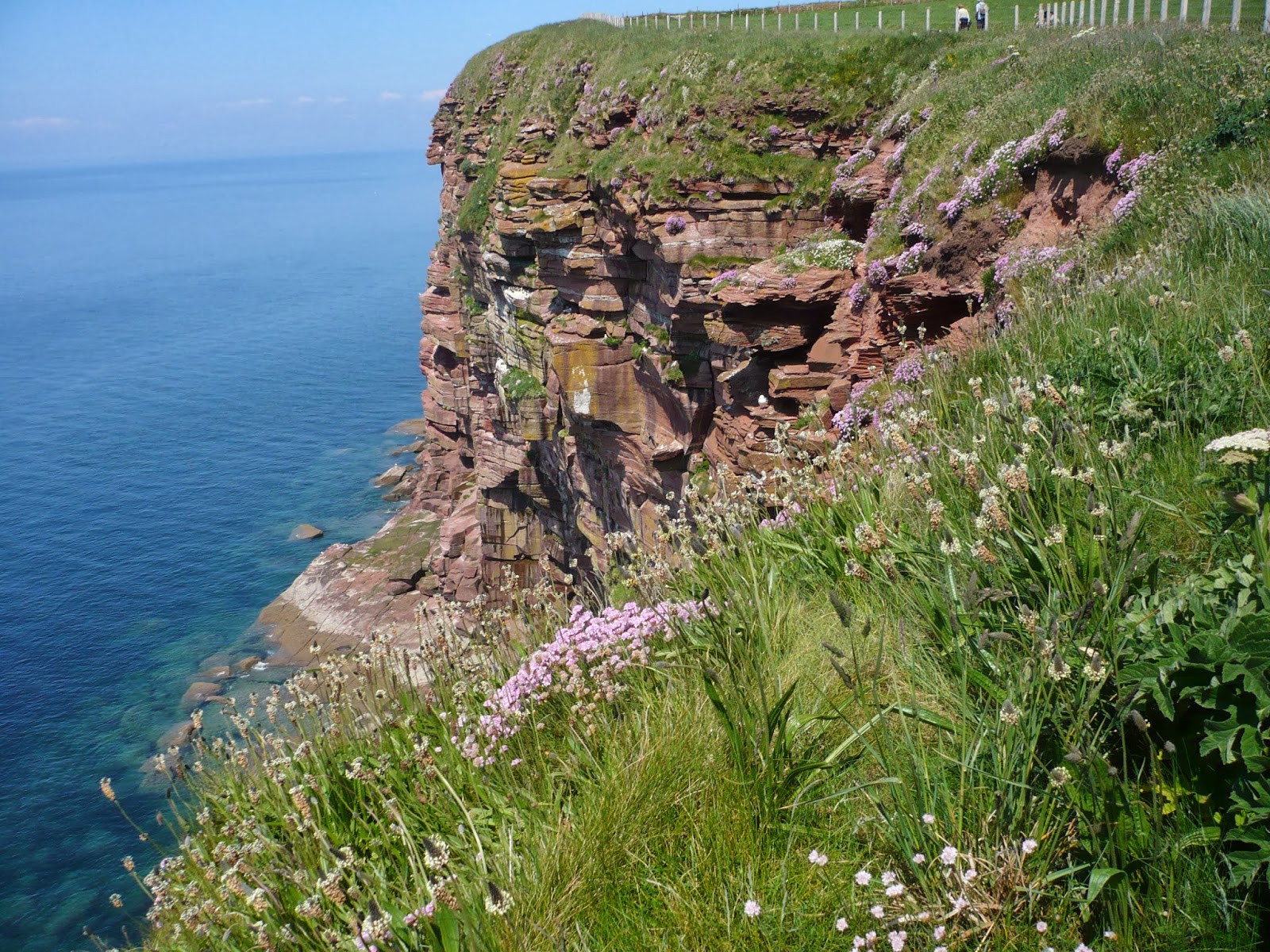
Walking out of the village to the sea and the most westerly part of Cumbria are the sandstone cliffs of St Bees Head. This is also the start of the 182 mile coast to coast walk across northern England where tradition has it to dip your feet in the Irish Sea here (or bike wheel if doing the C2C), and after passing through three contrasting national parks reaching the end at Robin Hoods Bay to do the same in the North Sea. The preferred route is usually west to east because, as the Irish blessing goes, the wind is ever at your back. I however am heading north.
along the coastal path on a warm June day, and a summer that abounded in buttercups. The views were hazy but in the distance can be seen the St Bees Lighthouse
and the path crosses inbetween that and the
coastguard lookout. The sea here merging with the sky it was so calm.
which the occupants of these cliffs were enjoying for turning around the corner there were
thousands of black guillemots. They almost look like dark pieces of rock from a distance but crop
a photo and here they all are. Over the last fifty years their numbers have increased but many
sea-birds stop here including Razorbills which come to breed from March to July. If lucky there are also a few Puffins,(not on this day) but there is no shortage of many other
species to be seen whirling over the
sea and
sky.
An entry to
ABC Wednesday, a journey through the alphabet, this week sojourning at S