Showing posts with label Antwerp. Show all posts

Friday, 7 November 2014

Pontoon Bridge

 On the 3rd October Belgians in Antwerp started to walk across the recreation of a World War 1 pontoon bridge. Calculations were made of the time it would take to walk across the 1,221 feet (370 metres) and tickets were issued in accordance with that number however people in real life don't behave in neatly predetermined way.  It was a beautiful day and they dawdled for indeed how often do you get a chance to stand in the middle of the Scheldt with your fellow citizens and perhaps cast your mind back a hundred years to think of the thousands who were fleeing the city in haste in 1914 and then take a photo or two.

I bemoaned the fact I couldn't find any photographs of the original 1914 bridge when I wrote about the retreat from Antwerp (here) but I only needed only to look further ahead in the War Illustrated who issued a 'Special Antwerp Number' on 24th October 1914 with articles from their war correspondents, drawings and numerous photographs which included the picture on the front of the dockside
The text says  "Antwerp's day of anguish. This photograph exclusively published here, shows the enormous crowd of despairing refugees on the North German Lloyd quay struggling to reach the floating pier (in the foreground) leading from the battered abd burning town to the temporary pontoon bridge. The escape of the soldiers was a matter of vital importance and some are seen crossing the pontoon bridge...One of the German liners disabled by the British before they left is shown"

"The last of the refugees to leave Antwerp as the Germans entered the city are seen crossing the River Scheldt - some of them by the river ferry-boat and some by the pontoon bridge, temporarily erected and afterwards destroyed to prevent the Germans following the retreating soldiers and fleeing citizens. The river was flowing with oil, run to waste so as not be of service to the invaders"
"A camera captures Belgium's last stand"

Personal stories:-
"Gathering century old memories of war time Belgium" April 2013  BBC News, Antwerp

Sunday, 28 September 2014

Antwerp

I have visited Antwerp twice, once by accident when taking the wrong exit off the ring road and once by intention for a longer stay because I was fascinated by what I saw on my first unintentional visit.  In my last War Illustrated post our French dragoons were looking for Germans and a few pages on in the same 29th August 1918 edition it was probably where they should have been galloping.
As the article implies Antwerp was considered the great redoubt built by the one of the leading fortification engineers of his time.  After Belgian independence in 1830 the city of Antwerp was proclaimed the National Safe Haven of Belgium, the last bastion of Belgian army in case of invasion by enemy troops and a safe haven from which to wait for help from allies.

As planned, the government, royal family and civil service in 1914 had decamped to Antwerp from Brussels to hold fast and the War Illustrated reported

"Gay, bright, picturesque Brussels has bravely prepared for the greater Waterloo.  The Government has been shifted to Antwerp, and the unfortified capital has opened to the enemy without a struggle. It had become a city of hospitals.  King Albert gave his splendid palace for hospital work and big hotel-keepers and large shop-owners turned their buildings into Red Cross institutions..."
"The immense fortress town, with triple belt of forts where the Belgians prepared for their last heroic stand"
The Gothic cathedral spire with its carillon bells still dominates the Antwerp skyline today as it does in the photograph and map. The optimism of holding the city for a year was ill founded as the Germans attacked with heavy artillery and on September 28th captured many of the outer ring forts.   The Belgian troops fought a rear guard action but were heavily outnumbered.  On October 1st the Belgium government sent a telegram to the British saying they would retreat in three days time.
Two more photographs of Antwerp and the Scheldt River that could be taken today.  In the background of the photograph on the right is Steen Castle
Steen Castle, Antwerp
where next month on the 3rd October 2014 a reconstruction of the pontoon footbridge across the River Scheldt to the Left Bank (Linkeroever) will be built by the Belgian and Dutch Engineering Corps and named the Peace Bridge. (See the Flanders Today article here)  Its purpose in 1914 was to be able to fortify the city with supplies and as a last resort be quickly evacuated. This was the route that the inhabitants would escape.
Belgians fleeing Antwerp to avoid entrapment (from 1914)
I have not found any pictures of that original pontoon bridge but the War Illustrated shows the rear guard in action
"Belgian rear-guard covering retirement"
And a reminder that after perfect weather the harvest of 1914 had been especially good
"Fighting Amongst the harvest. The Belgians and their black helmets with wheat-stalks to escape notice until they fire"


The pictures of the fleeing populace down tree lined avenues remind me that a hundred years later civilians are still fleeing violence in huge numbers in the Middle East.  Lets hope that in a hundred years time they too will live on a continent of peace. 
Antwerp surrendered on 9 October 1914 and one in five Belgians fled the country some to the Netherlands, France or Britain.   The Germans had a scorched earth policy because of the fear of guerrilla action.
"The rear of the German Army leaving Mouland burnt and sacked"

The village of Mouland or Moelingen in the photograph is near the Meuse river and was rebuilt after the war when the streets were widened and the central square enlarged.
"The railway from Landen to St Trond, destroyed by the Belgians to hinder the German advance".
(This was 6 miles of a single line of track first opened to traffic on 6 October 1839 )

Tuesday, 21 January 2014

Take the Bike

Wordsworth was inspired to write a sonnet here, 'Upon Westminster Bridge' ..."This city does a garment wear,/the beauty of the morning, silent bare./Ships, towers, domes and temples lie/Open to the fields, and to the sky"...  There are now very different towers and no longer fields but the trees provide the greenery on the embankment.  Our couple have no eyes for the view and the bicycle rider keeps an eye on the view ahead.  She is riding one of London's hire bikes usually called 'Boris Bikes' after the city's mop headed, bike riding mayor.  At present sponsored by Barclays Bank (its logo is on the back wheel) who are now bailing out, delivering only half of the £50M it had promised to pay and the deal will end in August 2015.  Well they do have to pay those banking bonuses. 
And nearby is one of the bike hire points. Three people are trying to work out payment and release system.  I have puzzled over these payment points myself, but not in London, I don't think there is pleasure in travelling on those busy lorry laden roads.
Although a more cycle friendly city like Antwerp in Belguim would be tempting.  These two were forward planning bike hire by taking notes.  The hire bikes are on the Jordaenskaai and the metal sheds to the right were originally built c1889 for the storage of goods being landed from the River Schelde which flows past even further to the right. Today it is a car parking area and since 1981 the roofs have been a protected historic monument.

Joraenskaai
The view of the roofs also shows how the bike route running past the sheds is separated from the main road.


Tuesday, 23 April 2013

Observing Okapi

Mmm these leaves look highly obtainable and overwhelmingly desirable 
Yes observe me and my long tongue which is also handy to wash my eyelids and clean ears, inside and out, its very sticky

Oooh almost there
Got one
Mmm what should I do now, the other leaf source the oblong bowl is empty
Guess I'll just wait for the meals on wheels trolley with my Okapi name on it. 

The Okapi shown is a male, identifiable from its skin covered horns. Although the Okapi looks similar to a zebra its closest relative is the giraffe and indeed is sometimes called the "forest giraffe",  the other nickname is the 'African Unicorn'.  Its home is the tropical rain forests of Central Africa.  A solitary animal which needs acreage to roam (the male more than the female), this has become a problem due to shrinking habitat because of human development and also war and poaching. There are probably 10-20,000 in the wild and the Democratic Republic of Congo project the Okapi Wildlife Reserve is a UNESCO World Heritage Site dedicated to preserving and increasing number. It located in the Ituri Forest near the border with Sudan and Uganda. The European Endangered Species Programme for Okapi is led by Antwerp Zoo (where these photographs were taken) and up to now has bred 48 calves and counting this video was the 48th with another one due.

An entry to ABC Wednesday - a journey through the alphabet - jump over to see the other O there


Tuesday, 19 March 2013

June Flowers

Foxgloves, beloved of bees whose favourite colour is purple, are out in profusion in my favourite month - June, the air is warm, the countryside has exploded into colour and the hedgerows hide the little
wild geraniums,
 wild roses twine through the hedges
Heath Spotted Orchid   


and it is the peak season for the Heath Spotted Orchid which loves the bog land and marshes. Sometimes it can be difficult to distinguish it from the Common Spotted Orchid for they can hybridise and sometimes they are just
tricky to spot hidden among the jumble of grasses
The wild jostles with the manicured golf course
This clipped lawn is for play (there is a football net out of sight behind me to the right)  but there is enough room for a rhododendron
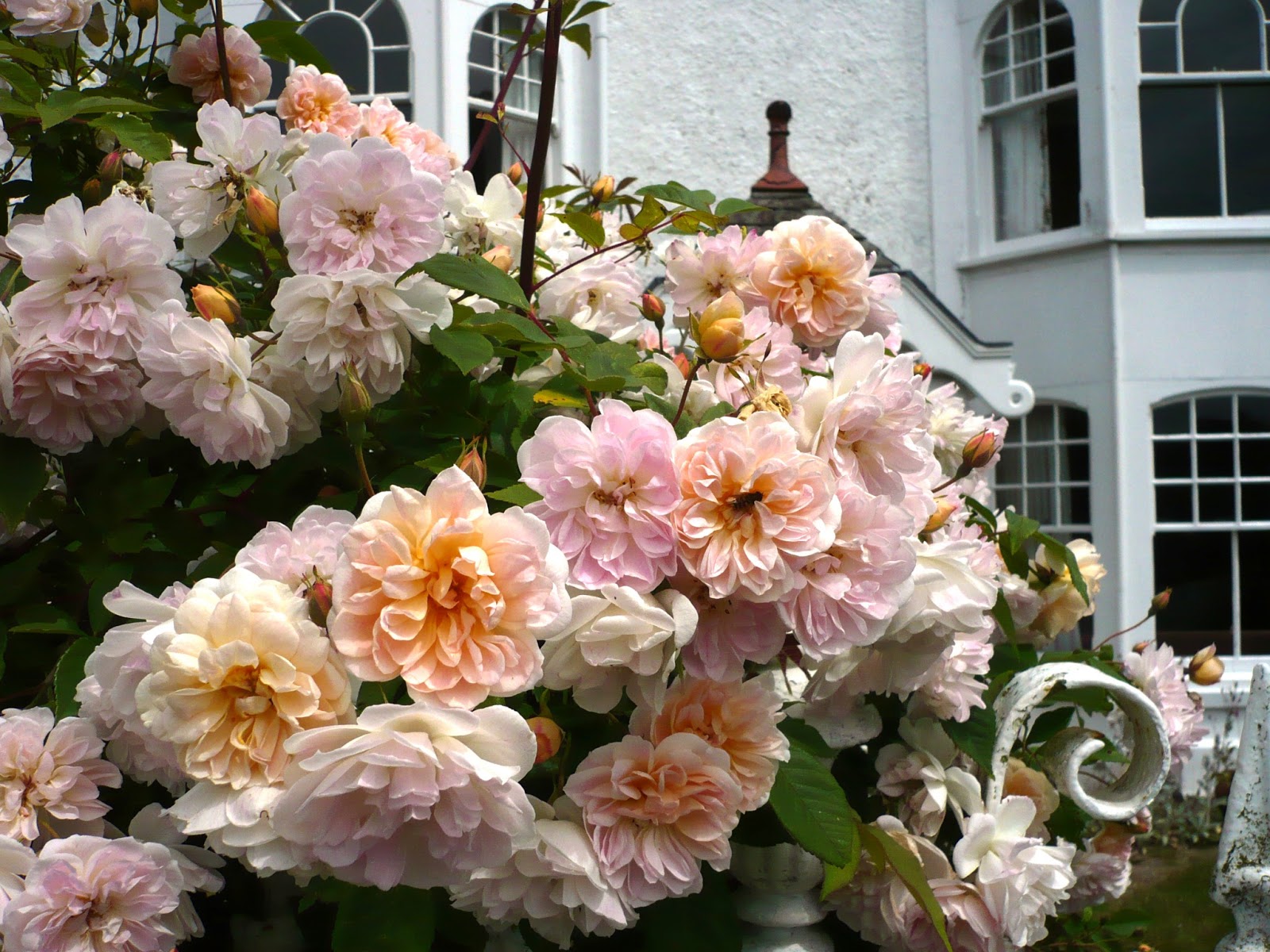
 and of course no garden is complete without roses.  It is also the best place to sit out and eat the June's early
English strawberries. Not the supermarket ones grown to be robust for transport and tasteless but the sharp, sweet and delicate local ones. I've cheated with this photograph because they are not English strawberries as it is Antwerp Railway Station in Belgium where they are selling Strawberries dipped in a big vat of chocolate however look there is someone walking past wearing a Union Jack jumper. 

An entry to ABC Wednesday - a journey through the alphabet


Tuesday, 8 January 2013

Going to the Zoo

 The last letter of ABC Wednesday and I'm taking a trip to the zoo. A popular place for school trips, this little group were waiting for the rest of the class before venturing through the gates. 

 Where these Chinese style lions make a grand entrance to the Antwerp Zoo, almost better than the real thing.

As we are concentrating on the letter Z this week I will show one of my favourite animals

zebras blending together in super stripes.

Founded in 1843by the Royal Society of Zoology the Antwerp Zoo's initial aim was to encourage zoological and botanical science.  Its initial area of 4 acres kept expanding throughout the 19th Century until it reached 26 acres. There are recent plans to add another 4 acres. The zoo has changed greatly since the 19th century with more emphasis on space and light for the animals  although some things remain the same such as the
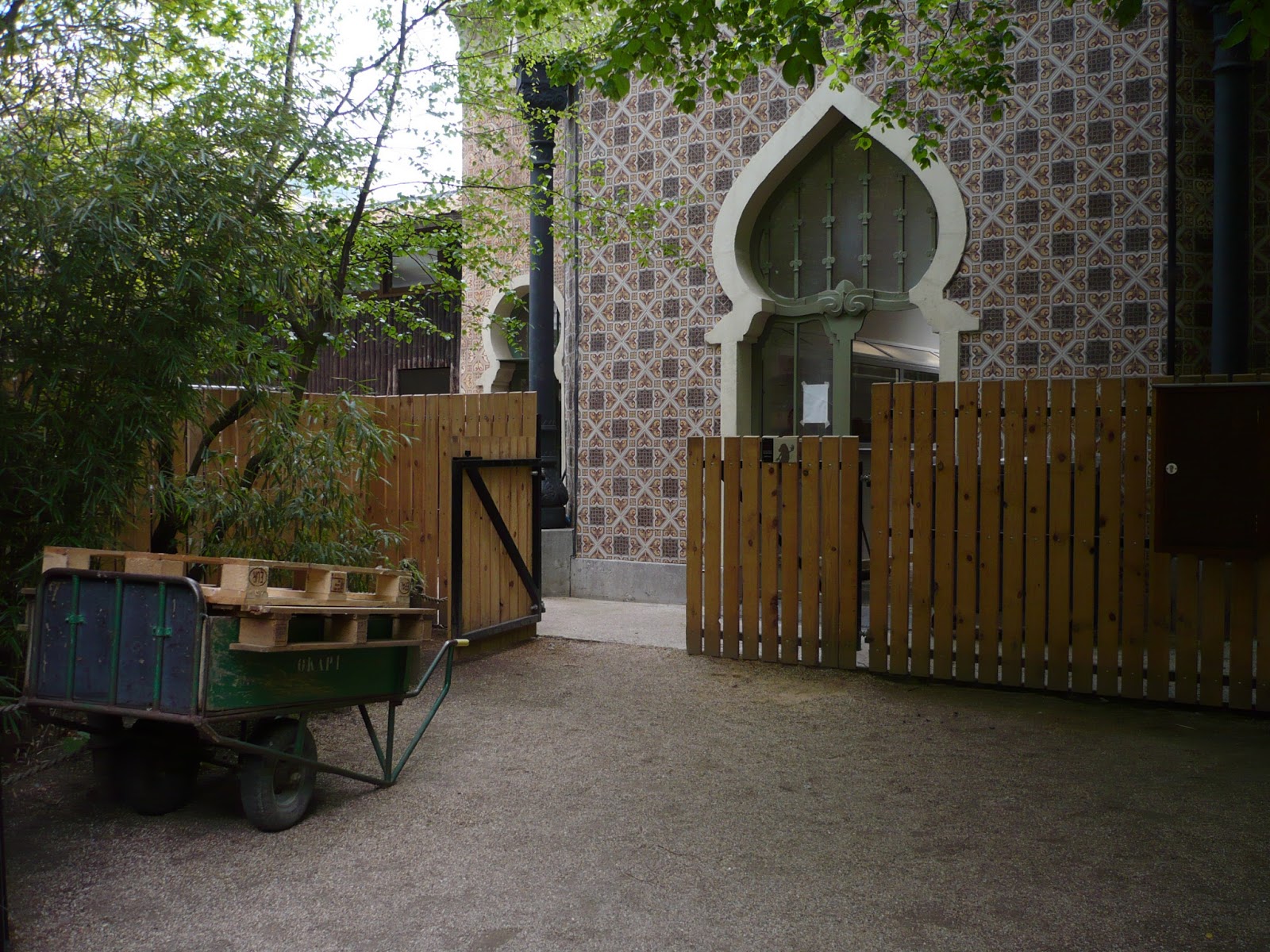
 Giraffe House built in the style of an Egyptian Temple and donated to the zoo in 1856 by King Leopold II.  The giraffes were mostly outside but the food will arrive through this entrance
Apparently the designs all tell the story of the zoo and the animals arriving from the four corners of the earth
 The Egyptian hieroglyphs give more information. The row of five people have their names in hieroglyphs but I have no idea who they are.  I imagine this was a period of great excitement for all things Egyptian as Champollion had only made the complete decipherment of the symbols in the 1820s.  The aim of the building, built by Charles Servais was to "delight Antwerp and to educate its inhabitants.

An entry to ABC Wednesday. A journey through the alphabet and the end of the round 11.  Are you in for Round 12?

Tuesday, 4 December 2012

Under the Scheldt

Saint Anna Tunnel Dimensions
This week I'm going underground or rather underwater and below the Scheldt River where the city of Antwerp's Saint Anna Pedestrian tunnel was built in the 1930s.  Started in 1931 it was opened in 1933
The tunnel is also handy for those pedestrians that ride bikes.  Of course the thing that fascinated me were the escalators that took us up and down to the tunnel

Wooden and very much a product of 1930s Art Deco they trundle  by the white ceramic tiles.  There is also a lift but the preferred option seems to be the escalator.

Always on the move, unless the stop button is pressed. 
First Level
 The depth of the tunnel means that there are not just one but two escalators to ride

 Reaching the bottom and a ten minute walk, or an even quicker bicycle ride and the destination is reached.
We travelling from the bustling city of Antwerp discovered the other bank was full of parks and people enjoying the day. We browsed a riverside collection of propellers and other maritime ephemera, its reason unknown to us, but we spent some time spotting which propellers had been built in the UK.   It is also undoubtedly the perfect place to take photographs of the Antwerp skyline and watch the barges sail past.  We passed a pleasant time strolling on the banks and made our way back to the tunnel entrance
 Back underground
And back to the bustling city

An entry to ABC Wednesday. A journey through the alphabet which has reached the letter - U