Showing posts with label Liverpool. Show all posts

Wednesday, 18 March 2020

Split Decision

Split Decision by Sam Shendi on the Plinth outside Liverpool Parish Church
Walking into Liverpool from a different direction than usual when visiting the city I turned into Chapel Street and was hit in the eye with these colours. I had discovered the Liverpool plinth.  Like London's fourth plinth in Trafalgar Square it also hosts a temporary sculpture but in this case it is chosen by competition open to people living and working in the north of England.

This striking sculpture measures 45 metres and the artist says the "colours express emotions and fears that a depressed individual experiences when having to make a decision".  I wonder if the body also represents a bottle of pills or just the feeling of being blue.  The colours are the same in each direction - choices are hard when not being able to see a difference in direction.
One of life's coincidences means that this sculpture, chosen in 2019, is so relevant in these strange times of the Covid 19 virus and the instruction to everyone of social distancing, only necessary travel and self-isolation when all sorts of decisions, big and small, will have to be made.  
 
The Artist:
Sam Shendi is an Egyptian born British sculpture who lives and works in Yorkshire. His other works can be seen on his website.  He works in industrial materials such as stainless steel, aluminum or fibreglass to create his figurative works but the colours distract from the material and what lies beneath,  They are fascinating from the whimsical to the thought provoking.

The Not Just Hockney website has a short bio and for lover of the industrial history a photo of his commemoration of the nail makers of Silsden.  Hopefully in the future I could combine a visit to Silsden with a walk by the wonderful Leeds to Liverpool Canal.  

Tuesday, 25 April 2017

Pilot Boat

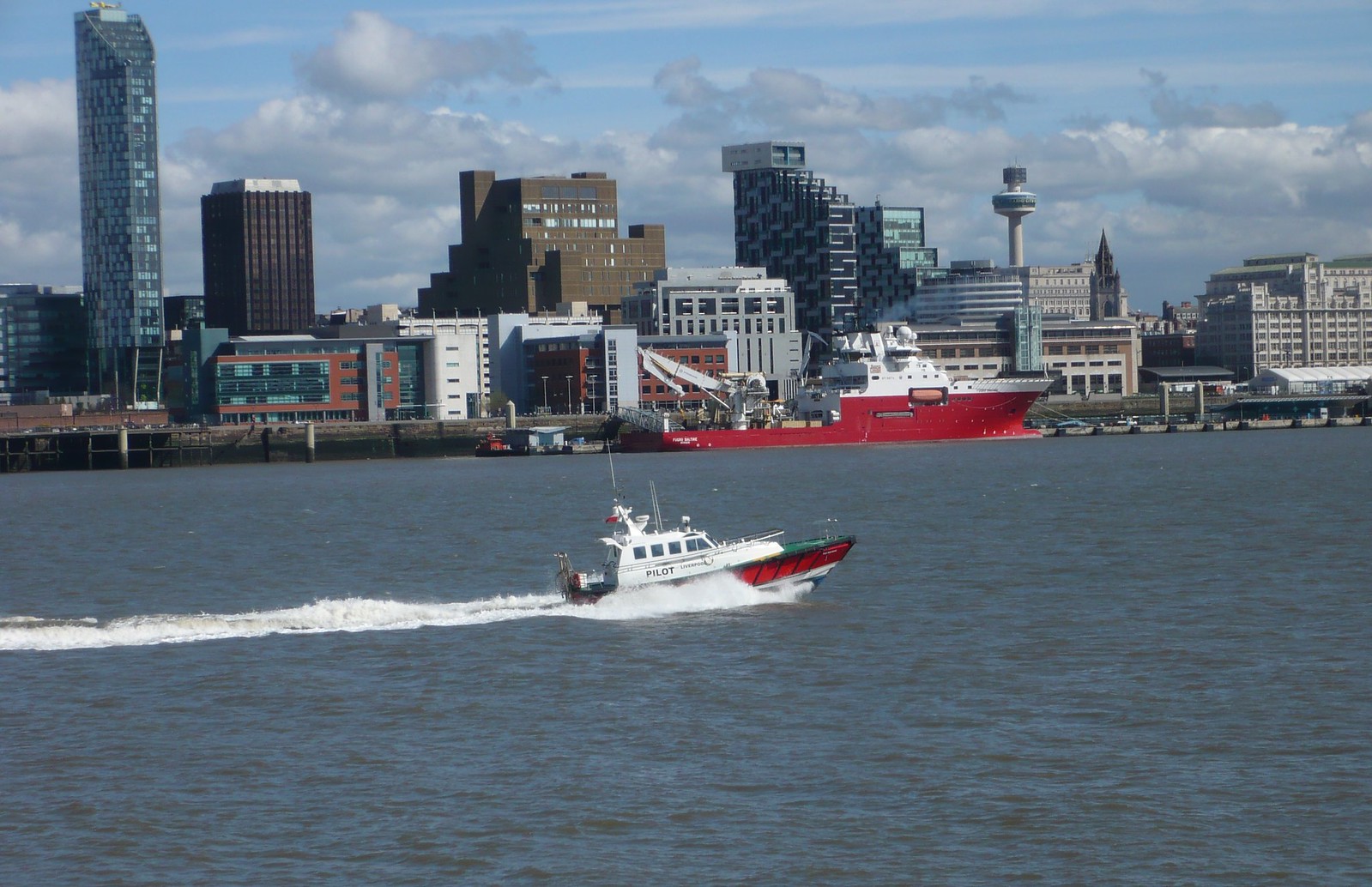
Liverpool Pilot Boat
One of Liverpool's Pilot Boats zooming past the waterfront and a ROV Support ship, the Fugo Saltire.  The pilot service celebrated its 250th anniversary of guiding ships into port last year. 


The Liverpool Maritime Museum has an exhibition on at the moment called 'In Safe Hands' which charts the service from those days of sail to today's high speed launches.

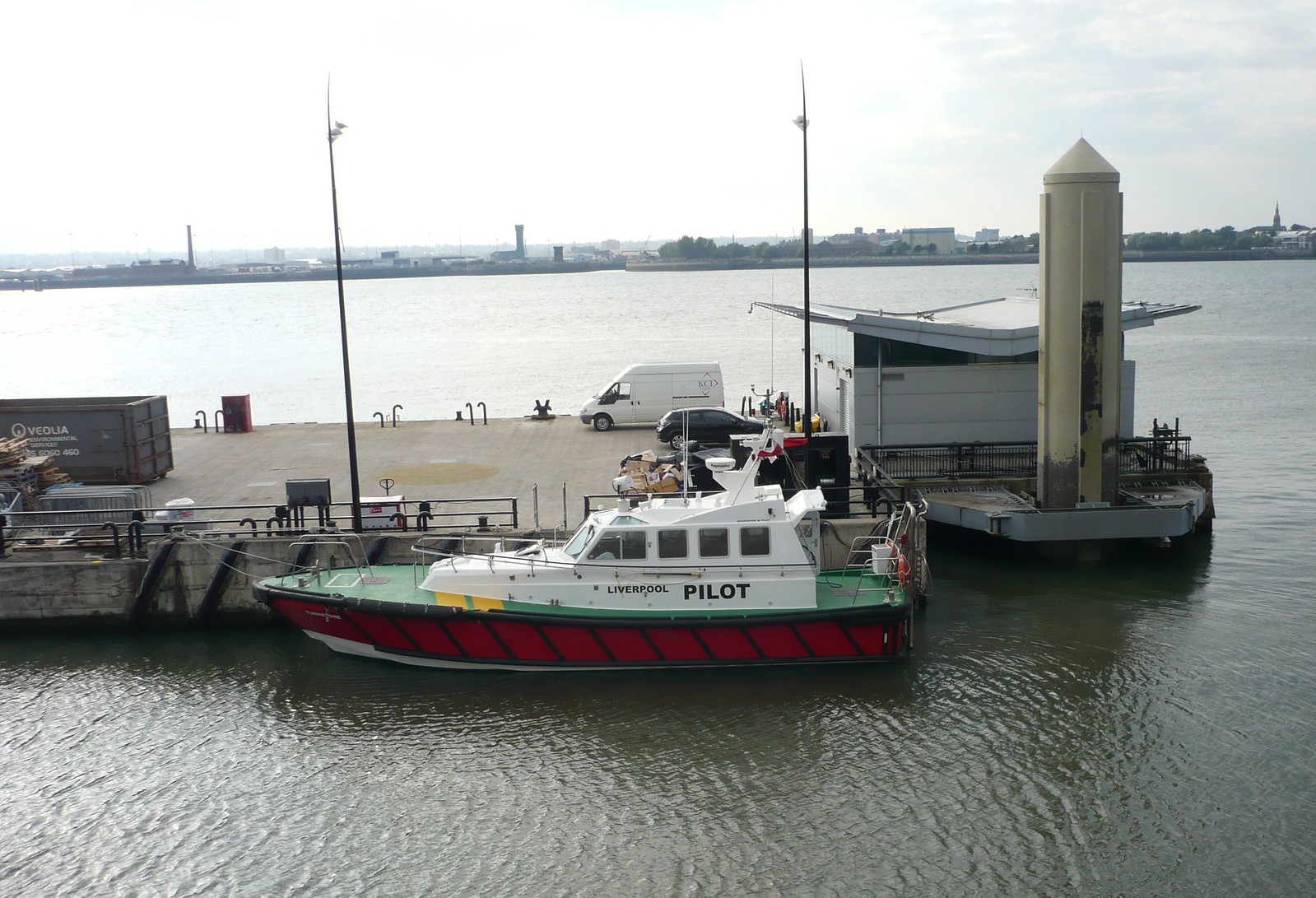
All the pilot boats are named after seabirds


and this is the Turnstone.  What a pity I don't have a picture of an actual turnstone but here are some beach pebbles
and the turnstones might be around somewhere busy tuning stones to find something tasty underneath.
The preening juvenile herring gull has other things on its mind.


An entry to ABC Wednesday, a journey through the alphabet, this week sojourning at P here


Tuesday, 13 December 2016

Windows on Life

A beautiful aspect of the of hills and woodland is glanced through the window's of St Bega's Church in Eskdale Green. Originally built as a chapel of ease in the 19th Century generations will have gazed on the seasons changing from the church seats.
At Colton Church (Holy Trinity) the words of the Psalm 150 greet one coming though the door, which urges the congregation to praise God with singing and dancing.
Windows of a more practical nature in a Signal Box when alert eyes are needed to keep the trains safe and I'm taking the picture through the train window as it slowed down.

Even more windows at the Bluecoat Art Centre, originally built as a school in 1717.

I've got a double here as there are not only window but also a yellow poster advert for WT Windowstore in one of them. I think they were doing some renovation at the this, the old British and Foreign Marine Insurance building in Liverpool. To be honest I was more interested in the building's mosaics which can be seen in more detail here 

An entry to ABC Wednesday, a journey through the alphabet, this week sojourning at W here

Tuesday, 2 February 2016

Duck Dabblers

The Open Eye Gallery displays photography on the Liverpool Waterfront but when passing by last year, out of the corner of my eye, I spotted giant ducks in the entrance hall and of course I had to have a closer look.  There were a couple of people busy painting what I suppose you could only float in a giant bath.  They were intended for a Duck Trail across the city and themed on the history and sights of Liverpool.  As can be guessed from the horsey eyes this one is the Aintree Race Course, and the jockey silks are on its chest 
Taking a break to have a chat with his companion who is painting one on a more nautical theme
The eyes show a ship's captain and even little ducks get a look in.  The Duck Trail was part of the Cunard Liners 175th Birthday Celebrations which took place last year so I imagine this one would not move far from here to waddle by the liner terminal or perhaps outside the old Cunard Bulding.
This one with a parrot was a bit of an enigma as my first thought was, pirate, but then it has three stripes and a collar and tie.  A browse around the internet found it as Airport Duck and it will eventually have an airstrip tongue and wide open eyes (the latter a must for any airline pilot I hope).  The two ducks in the background are still waiting for their makeover.

An entry to ABC Wednesday, a journey through the alphabet, this week sojourning at D here
   

Tuesday, 4 August 2015

Razzle Dazzle

Dazzle Ship
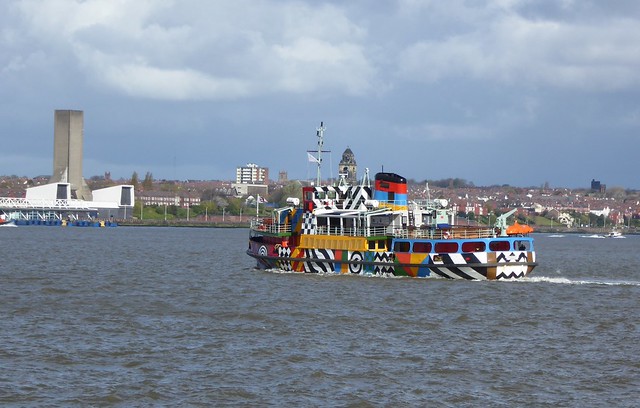
Here is the Mersey ferry 'Snowdrop' crossing the river heading for Seacombe and decked out in Dazzle, or to be more precise it is called "Everybody Razzle Dazzle" and the design is by Sir Peter Blake, a pioneer of pop art with a impish sense of humour.  I imagine he enjoyed this project.  I'm rather fond of his collages, of which the most famous is the cover of the Beatle's Sergeant Peppers Lonely Heart Club Band album.

The Dazzle project was part of the Liverpool biennial but also to mark World War One which was when the artist Norman Wilkinson (1878-1971) came up with this idea to protect naval ships. Unlike normal camouflage whose objective is to hide,  this camouflage's idea was to mislead by making it difficult to estimate speed and bearing.  Every ship design was different, for the full dazzling differences feast your eyes here  (HMS Argus is confusing enough on a photo goodness only knows what it looked like on the high seas).  The connection with Liverpool is that the Dazzle ships of WW1 were mostly painted there.  When not serving in the navy and inventing Dazzle Norman Wilkinson was a fine maritime painter.  My first introduction to his work was the LMS railways travel posters of the 1920s and 1930s, today highly collectable items but for those without deep pockets available on postcards. I could have gone with a Liverpool view but as a contrast show a scene nearer in distance to where I live,  a dazzling day of
gentle sailing on Windermere.
Dazzle Ship
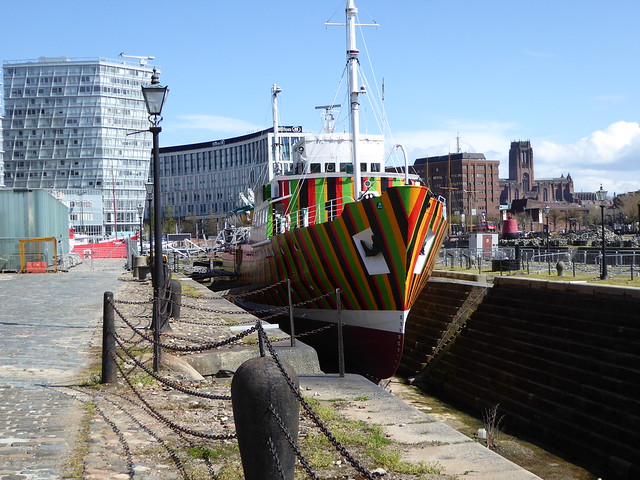
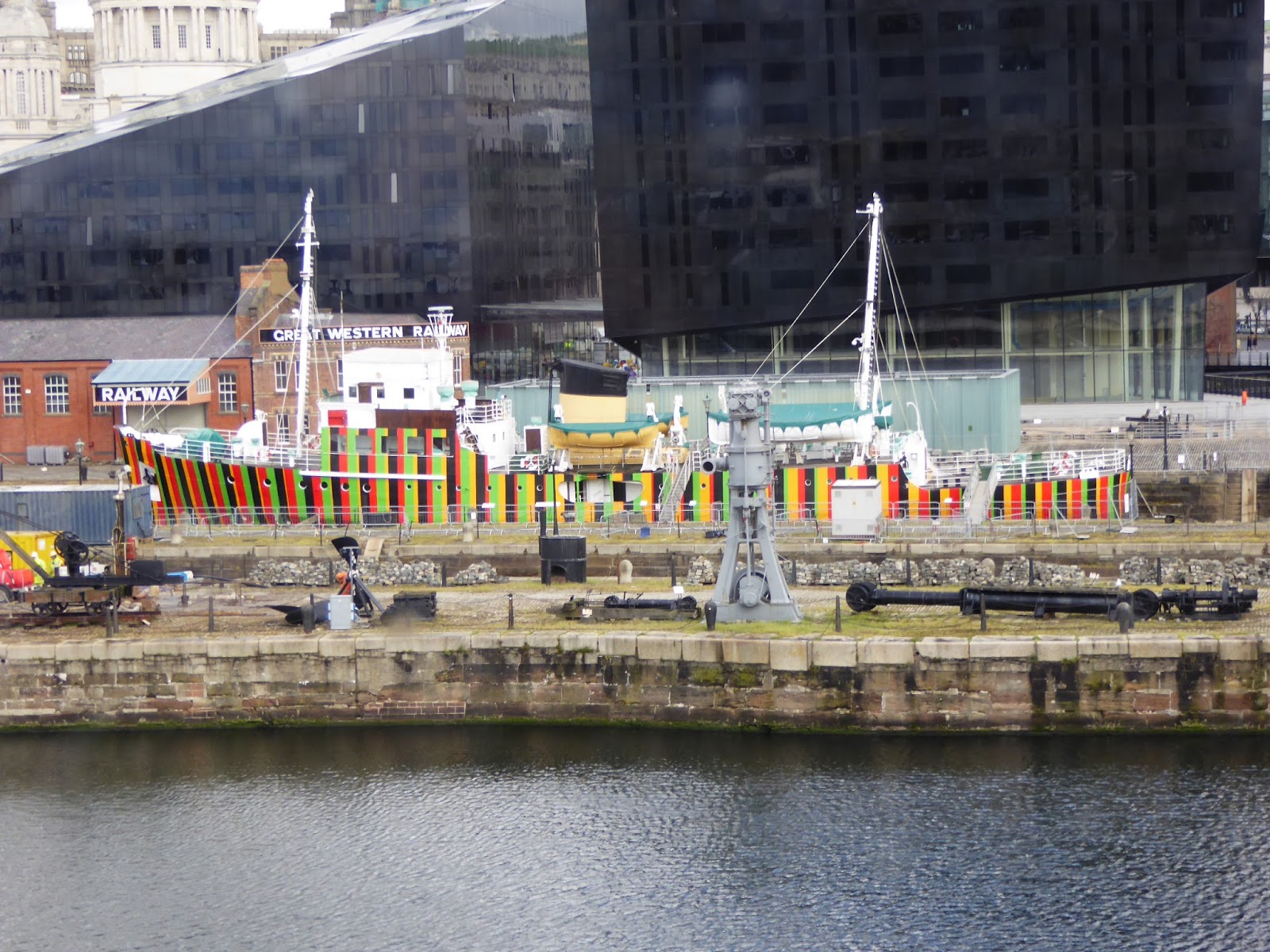
Time to return to the Liverpool waterfront and the pilot ship Edmund Gardner in Canning Dry Dock with its Dazzle stripes.  Unfortunately all the area was padlocked and barricaded off so this was the best angle I could get, although the following day I did take some pictures from the rain splattered windows of the Maritime Museum, none of them very good, but the next photo at least shows more of the stripes
The Dazzle is by the artist Carlos Cruz-Diez (Induction Chromatique à Double Fréquence pour l'Edmund Gardner Ship, Liverpool, Paris 2014).

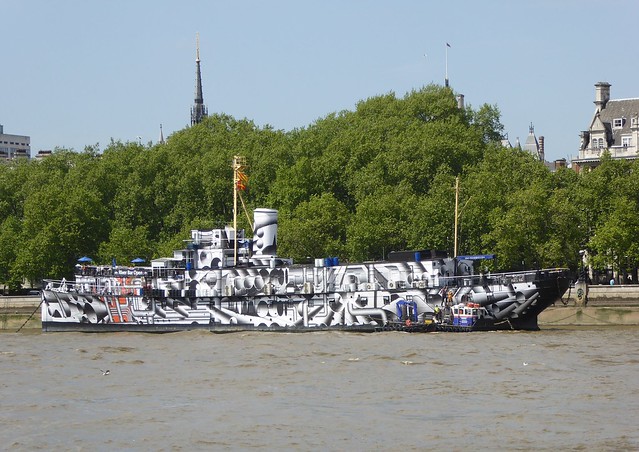
Lastly to complete the trio of Dazzle ships here is one I had no difficulty photographing from every angle because it was moored near Blackfriars Bridge in London and I merrily clicked my way along both banks of the Thames.
Dazzle Ship
This is HMS President one of the three present day surviving Royal Naval ships of World War One (its date of 1918 may be a clue to one of the reasons it survived). This time the artist is Tobias Rehberger. When I took this photograph in May it was due to be officially 'launched ' in June so I wonder if the men at the front by the tug were putting some finishing touches or cleaning it.
Here is the ship's stern giving a closer view of the design and taken from the Victoria Embankment where she is moored.

All three ships were part of the  "14-18-NOW" WW1 Centenary Arts Commission.

An entry to ABC Wednesday, a journey through the alphabet, this week moored at D here
 

Tuesday, 30 June 2015

Sea Yonder

Taking an amble along Albert Dock we spotted this lively little dog scampering around the yacht in the early morning sunshine and spent some time enjoying its antics as it ran around the ship and in and out of the cabin.  Who can't resist a sea dog.  There was no sign of its owner who I suspect may have been still snoozing below deck.   For some reason I thought it was an Australian yacht perhaps because it was coloured yellow and green and I was concentrating on capturing a fast moving dog. but as discovered when I downloaded my photographs, the Sea Yonder is registered in London
There is always a nice mix of yachts moored  here from the modern to the historic although to catch a yacht in action take a turn left and look yonder
there might be one speeding along the River Mersey. This one is sailing past the LPG tanker Gas Pasha. 

An entry to ABC Wednesday, a journey through the alphabet, this week sojourning at Y here


Tuesday, 16 December 2014

Waterfront Warehouses

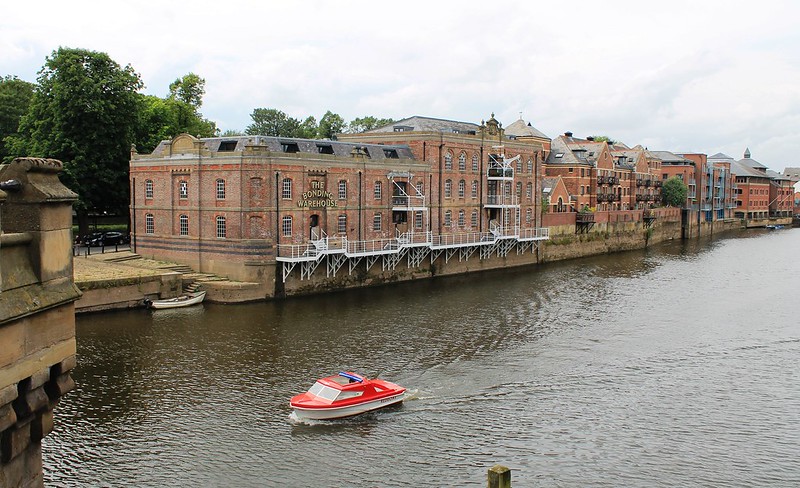
Bonding Warehouse, York The Bonding Warehouse in York.  
This part of the River Ouse was the principal dockside for seagoing vessels until the 19th Century.  The warehouse was built in 1875 for the storage of imported goods liable to excise duty until it closed in 1958.  A brief history of its intervening years can be found here  It has recently been converted into luxury apartments and offices which includes an escape ladder for the occupants in the event of flooding. 
Northern Docks Warehouses
 Northern Docks Warehouses, Liverpool
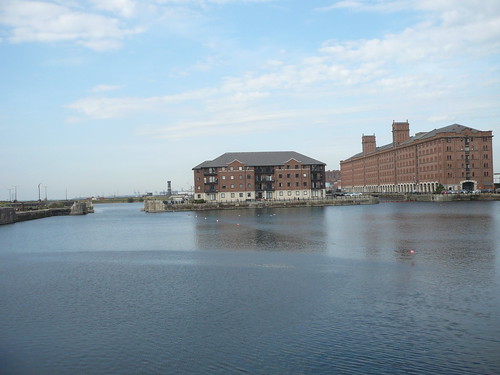
There would certainly have been goods here that would attract excise duty for the largest warehouse in the photograph is the Tobacco Warehouse, which when it was built with 27 million bricks in 1901, was the largest brick warehouse in the world and indeed may still be.  The area between it and the Stanley Warehouse in front of it has been nicknamed "pneumonia alley" because it is usually in shade and in this breezy location acts as a wind tunnel.  I was stood on an unusually windless day on the Mersey ferry doing the triangular loop from the Wirral peninsula across the river and back.
Waterloo Warehouse
 Waterloo Dock, Liverpool
I'm on dry land here by the Waterloo Dock and  the converted East Waterloo warehouse apartments to the right.  The Liverpool Dock complex is massive and runs in a continuous row along the Mersey, there are still lots of working docks but it always blows my mind when I imagine what it was like in the past when its 7½ miles was at full pelt with cargoes leaving and landing from all over the world.  Of course the most photogenic of the old Liverpool warehouses are those of the Albert Dock but as I have contrived over various rounds of ABC Wednesday to feature them I'm managing to resist the urge to include them again.
Oliver's Wharf, Wapping
 Wapping, London
Journeying south to the Thames River here is Oliver's Warehouse. Built in 1869-70 for George Oliver in a Tudor/Venetian Gothic style to house general cargo ultimately its main use was the special storage facilities for that favourite beverage of the British, tea . This was one of the first warehouses in Wapping to be converted into apartments and its famous residents have included Alex Guinness and Cher.

Do you get the impression I like taking pictures of Victorian waterfront Warehouses?

An entry to ABC Wednesday, a journey through the alphabet, this week sojourning at W here
 

Tuesday, 1 April 2014

Libraries Through the Lens

Squeezed in between more modern structures this little building caught my attention while in London at the weekend.  I wondered what it was, but not for long,  because the sign above the left door says "Public Library".  Looks very inviting doesn't it?  The architect was Sir Alfred Brumwell Thomas (1868-1948) who was, as can be seen, a fan of the baroque revival style. Built at the beginning of the 20th Century it is one of the libraries funded by the great philanthropist Andrew Carnegie. He rarely turned down requests for a grant to build a library , the only stipulation was that the local authority would fund its upkeep.  Large parts of the English speaking world have Carnegie Libraries, including my own town. If he was around today doing the same thing these buildings would be very functional but most that were built under his inspired idea to give access to books to all were places you could both learn and dream.   What other purpose could that cupola have but be one to dream under especially when it looks like this inside
This interior view is from The Greenwich Phantom's blog who marvels at the three domes in one building here and appropriately calls it a Greenwich Secret.  If I had known there was such an interior I would have made my way through that public library door to marvel.
Built on a rather grander scale is Liverpool's Central Library, the largest of the cities 22 libraries. It is located in the rows of classical buildings on William Brown Street and has recently been reopened after extensive interior refurbishment last year. I think the rotunda is the reading room but the entrance is the one with the umbrella tables on the left. How very civilized, you could sit and read your book there in the sunshine. The refurbishment also introduced a roof terrace where views of the city can be gained and a literary pavement into the building which can be seen on the BBC's 'In Pictures' views of the £50M restoration here. Always a joy to hear about restoration rather than closure of a library.
 Lastly we have Winchester Library which has been re-branded as the Winchester Discovery Centre, the photo taken at sunset when the exterior floodlights were coming on.  Located in a building that is a former Corn Exchange from 1838, like the other libraries I have shown it is a listed building, but unlike the others its one I have actually been inside.  It is both a lending and reference library but they also have a small art gallery on the top floor with a interesting exhibition programme,
Demco Interiors photograph
up those stairs. It also has a performance hall, shop and café;  lots of discovering time could be spent in here. 

An entry to ABC Wednesday, a journey through the alphabet, this week sojourning at L here.
http://abcwednesday-mrsnesbitt.blogspot.co.uk/2014/04/l-is-for-lots.html


Tuesday, 11 March 2014

I ♡ Ice Cream

This heart shaped ivy growing in St Bees Churchyard caught my interest.  
As indeed does any ice cream van, no matter the season and if it is being sold from a vintage van, irresistible.
This is one of five vintage ice cream vans owned by the Real Dairy Ice Cream Company from the Wirral.  It looks lovingly restored as it even has its make painted on the side - 1938 N1 - the distinctive shape of a Commer van.  A British company that made post office vehicles,  light vans, trucks, military vehicles and buses from 1905-1979.  As part of the Rootes group it was taken over by Chrysler when it continued to  made vehicles under the Dodge badge. 
I had spotted another vintage ice cream van by the Albert Dock earlier in the day when the September morning mist was just starting to clear. This is a 1948 Bradford Jowett which were built in Yorkshire from 1946-1953, its body variants a popular post war choice for a van noted for its sturdiness, stability and economic running.
  Time for an ice cream?

An entry to ABC Wednesday, a journey through the alphabet, this week sojourning at I here. 

Tuesday, 14 May 2013

Robin on the Rocks

The unusually long winter this year resulted in the snowdrops staying around for many many weeks. This photo was taken on the 9th April and they are still in full bloom. Maybe that is why the red breasted robin is giving them a good look over as is rests on the rock.

Now what other red birds are there?
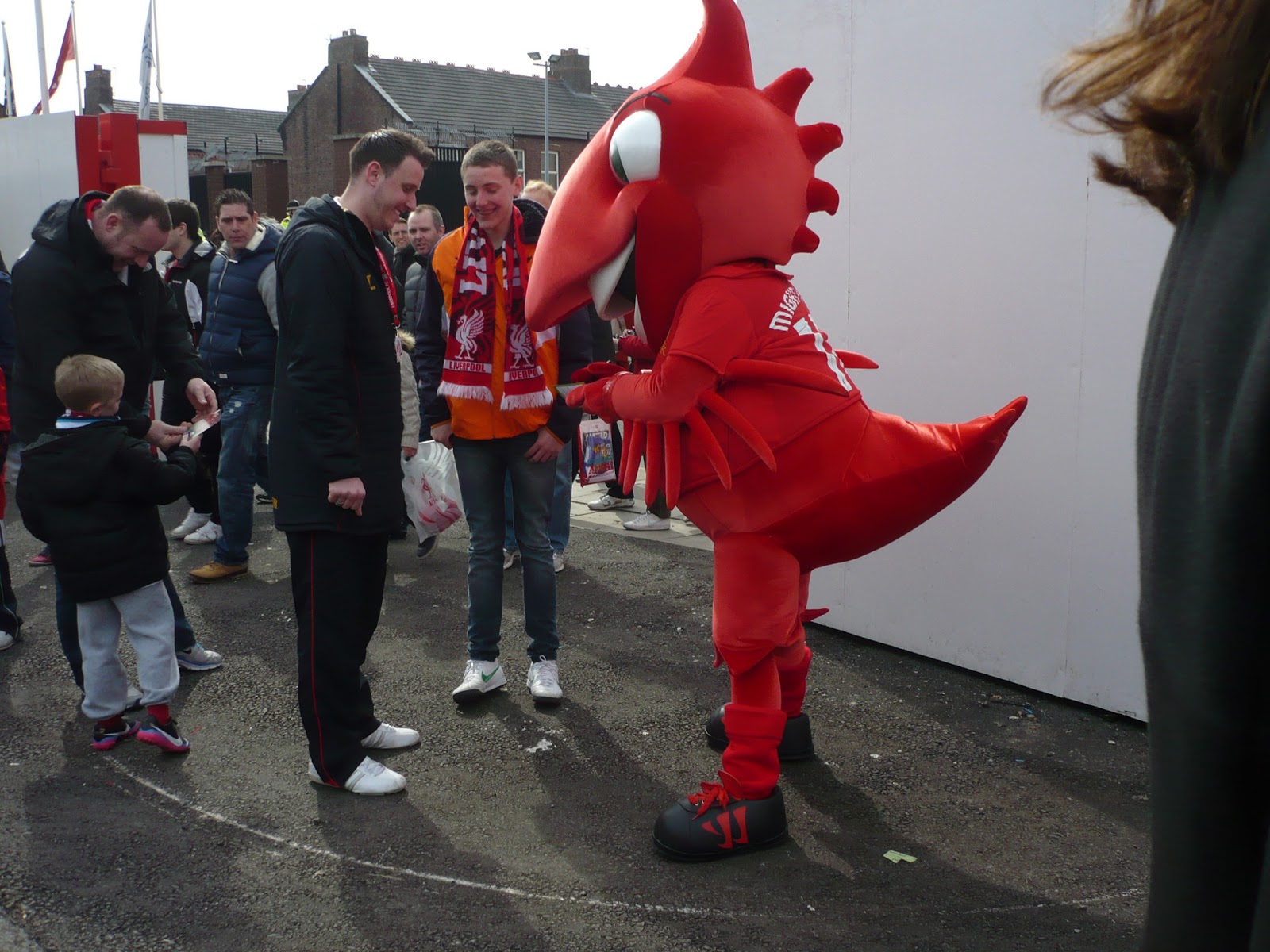
'Might Red' in the Fan Zone, Anfield
Oh yes , the "Mighty Red" Liver Bird. The mascot they have started to use in community work, here posing for pictures. Then once posed
having a chat, possibly about those tiny wings.  I don't think this thing can fly.
The Kop, Anfield
Now that banner shows the mythical Liver Bird, symbol of Liverpool,  resplendent in red, those wings would surely fly high.

An entry to ABC Wednesday - a journey through the alphabet