Showing posts with label Cheshire. Show all posts

Tuesday, 29 November 2016

Up


 Tying Up on the River Lazy where it  meets the Duddon Estuary on the Cumbrian coast.


Up high, glad I'm not at the top of this very long ladder in Leeds.


Stepping Up on the 'Sandstone Trail' steps on Bickerton Hill, Cheshire.

where there is a nice view up at the top of Broxton village but some find the undergrowth smells more interesting 

An entry to ABC Wednesday, a journey through the alphabet, this week sojourning at U here


Tuesday, 6 September 2016

Ice Cream

I was sitting in Hartley's Beach Cafe at St Bees and looked up at the ice cream on the wall,  noticed the numbers and puzzled what they indicated, was it flavours or sizes, and then belatedly realised it was actually the time.  I wonder how long this ice cream clock has been telling time?  The Hartley's Ice Cream they sell is made to the same recipe as when the founder started out locally in the 1930s selling ice cream from a motorcycle and sidecar and although the number of flavours sold today has increased vanilla still remains the best seller.

I was idly wondering how I could pad out one photograph to make an ABC post about ice cream and then unexpectedly last weekend I was taken to an ice cream farm, Yay, result.  So I take you from a beach cafe on the Cumbrian coast
south to the Cheshire countryside and to something on a far bigger scale, the Cheshire Ice Cream Farm at Tatttenhall.  This also started out as a family business and sold ice cream from the farm shop, fast forward 30 years and next to the unit making lots of ice cream for the retail trade is a large 'Adventure Park'.  Spot half a strawberry to the left?
This is Strawberry Falls part of the ice cream themed adventure golf course which winds around it (I snatched a photo while trying to negotiate the obstacles to pot golf balls). 
Being a sunny bank holiday weekend the Adventure Park was crammed. Apart from adventure golf, a visit to the animals in Fudge Farm the other objective of our visit was the giant Ice Cream Parlour, and yes the long queue meant I had lots of time to make up my mind to what flavour to choose. Unfortunately the ice cream tree
was decorative rather than edible although on a practical note
it does have a temperature gauge.  I believe when the temperature indicator drops from "I'm Melting" to "Snow Time" at the bottom there is a snow explosion from the top accompanied by music. It is timed for every half hour.  Is someone in this picture wondering how to make it happen sooner?

An entry to ABC Wednesday, a journey through the alphabet, this week sojourning at I here. 

Tuesday, 15 March 2016

Jodrell Bank

Jodrell Bank Radio Telescope has come a long way from when in 1945 Bernard Lovell  (after his war time work on radar) was researching cosmic waves with an ex-military radar detector unit at the University of Manchester, with difficulty, because there was too much electric interference from the city's trams.  The Botany Department had an outpost at Jodrell Bank so he decamped out here and arrived at a muddy field on the Cheshire plain, expecting to be here for a couple of weeks, but eventually proceeding to build his telescope with used equipment left over from World War II.  He was told by the firms he contacted that what he was proposing was impossible but in 1949 found an ally in a bridge builder, Charles Husband, who said it was difficult but not impossible.
The whole telescope rotates on circular railway tracks, the bowl (which rather excitingly started to move while we were perambulating around it)
is supported on either side by two towers and can be tilted at any angle. The telescope became fully operational in 1957 just in time to follow the launch of the world's first artificial satellite, Sputnik 1, by the Russians.  The bowl is in the shape of a paraboloid and gathers the incoming radio waves from space.  If you can pick out the two small dishes in the gloom at either side of the base of the telescope in the first photograph
Whispering Dish
these are two miniature paraboloid dishes where one can whisper a message to a friend and discover why the shape is so important.   Today Jodrell Bank Telescope has been renamed in honour of Bernard Lovell (1913-2012) which even now, all these years later, is one of the biggest and most powerful radio telescopes in the world and has gone on from work on quasars and pulsars to things not even guessed about back then.  Apart from his contribution to radio astronomy (for which he was knighted in 1961) Lovell was a great communicator and that tradition continues with the  
Discovery Centre, here I am outside the Planet Pavilion which explains the wonders of the universe and the Jodrell Bank telescopes, not to mention interactive objects to while away a gloomy December day. Then to move outside to enjoy one of Bernard Lovell's other interests
trees (I think this one is a Whitebeam). He opened the Arboretum in 1972 and there is a large acreage to wander around containing the national collection of Sorbus and Malus
In 2011 they opened the Galaxy Garden designed by the gardener Chris Beardshaw which tells the story of the formation of the galaxy in seven key stages. The story in plants surrounds a mound inlaid with a chalk motif of the galaxy which can be seen on the gate notice above.  Wondering why I did not get up close and personal?

Inappropriate footwear in one of the wettest winters on record
Here is the Birth of the Planets, the grass is clumps of dust particles starting to gather together.  You will just have to imagine the flowering perennials representing the protoplanets clashing together.  We all agreed that a return in the Spring would be a more interesting time and also the apple trees would be in blossom
so enjoyed a few surprises, the trees and of course
the radio telescope.

An entry to ABC Wednesday, a journey through the alphabet, this week sojourning at J here

Tuesday, 16 June 2015

Wild Boar

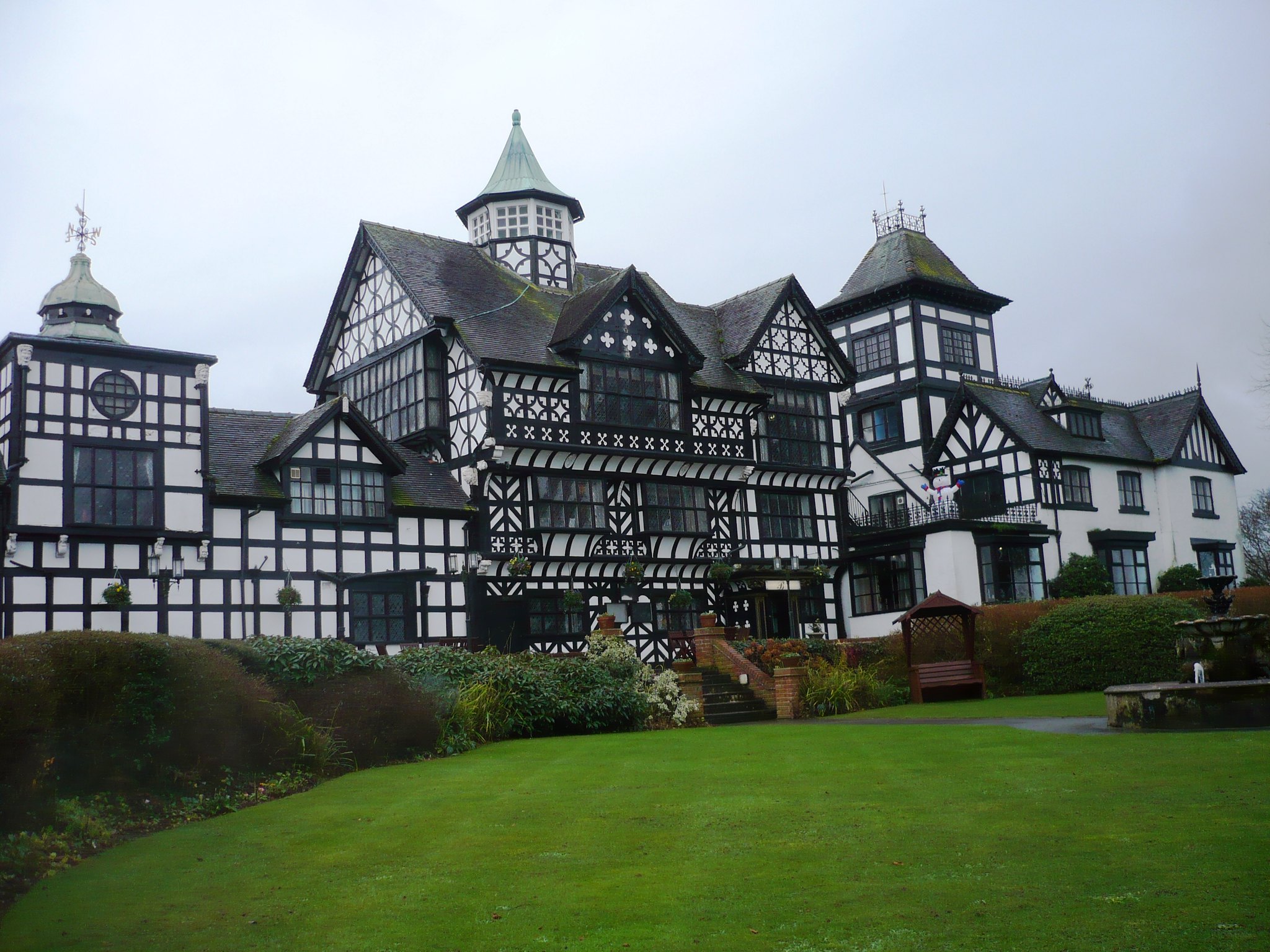
Wild Boar Hotel, Beeston
  John Naylor was a timber merchant from Warrington so when he came to build himself a country home in 1866 of course his impulse was to feature wood and so was created Beeston Towers, a sort of mock Tudor extravagance.  It sits on a hill surrounded by woodland and when he lived there was also above his work-sheds.  After his time it was sold and converted into a girls school  but that eventually moved to Chester. The building was once again sold and became a restaurant but today it is the Wild Boar Country House Hotel and a popular wedding venue.

I don't know why the name Wild Boar was chosen but I imagine in past times the area would be one that would be the perfect terrain for these animals, although it has been hundreds of years since they roamed around the woods, wiped out by hunting.  Despite this their name lives on in names of inns and here
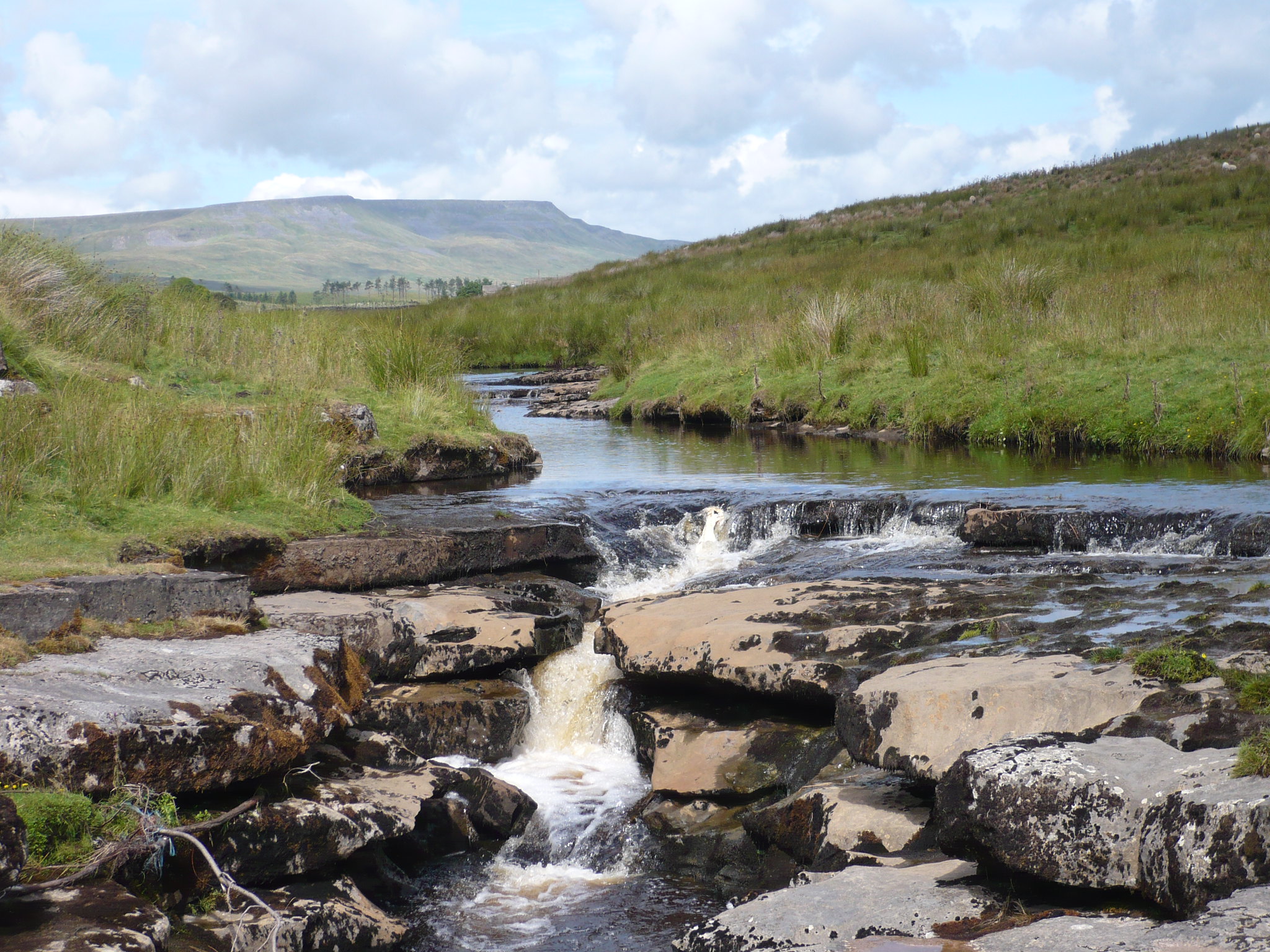
River Ure
 
 in Cumbria as Wild Boar Fell with its distinctive flat top  I can imagine them roaming the fells and drinking water from this stream which eventually becomes the River Ure.  Despite wild boar becoming extinct in Britain it has accidentally been reintroduced as these wily beasts have escaped from farms and zoos.  They haven't made their way back to Cumbria but there are pockets of wild boar around the country, mainly in southern England.  Unlike other wildlife escapees they find the climate perfectly to their taste as they were originally a native species and these pictures of them in the Forest of Dean show them foraging in the snow here.

 An entry to ABC Wednesday, a journey through the alphabet, this week sojourning at W here 
 

Tuesday, 29 January 2013

Choragic Monument

Choragic Monument
I was going to do 'columns' for ABC Wednesday but when I started to browse my photographs discovered I actually possessed something beginning with C - the Choragic Monument in Tatton Park.  The day we visited the park it was what could only be described as changeable, consequently this photo was rather dark, so I popped into Picasa and gave it the heat treatment to show off the classical architecture. Makes it look like the gods are about to descent. 
Tatton Park
The Choragic Monument of Lysicrates was designed by William Cole of Chester in 1820 and commissioned by Wilbraham Egerton to commemorate his travel through Europe. This was probably a Grand Tour, a traditional journey through Europe taken by wealthy young men to complete a cultural education of the Ancient World and the Renaissance. The monument's inspiration derives from that of the one in ancient Athens celebrating Lysicrates, wealthy patron and leader of the Greek chorus.  This piece of statuary was added to the gardens to give a note of finality to the garden tour and terminate the vista of  a long broad walk. The monument was a favourite picnicking site for the Egerton family with wonderful view of the parkland. 
 
If the weather was inclement their Neo-classical house would be a pleasant retreat set in the middle of 50 acres of garden.  The last in the Egerton line bequeathed it, parkland and gardens to the nation for us all to enjoy.

Lastly  here is the inspiration behind the Tatton Park monument, the original Choragic Monument of Lysicrates in Athens.

 Choregia defrayed the cost to Ancient Athens of the expense of theatre choruses it was considered a duty to be undertaken by prosperous citizens of Athens.  (A Greek Chorus comments with a collective voice on the dramatic action in the play).  The choregos (theatre sponsor) was responsible for assembling the theatre chorus, train them, pay them a wage and costume them.  There were 15 members in a tragedy chorus, 24 in a comedy chorus and 50 in a dithyramb chorus.  I guess that could add up to a tidy sum of money.  Each time the choregos competed against the other choregos for first place. The winner was entitled to set up a choragic monument at his own expense to immortalise his name.  Not only does the  Choragic Monument of Lysicrates  of 334BC survive it is also  the first use of Corinthian columns.

An entry to ABC Wednesday - a journey through the alphabet.

Tuesday, 18 December 2012

Wesh Ponies in Cheshire


Is that a unicorn in the distance?  No its a Welsh Pony. A Christmas parcel delivery saw us venture into Cheshire and on Sunday were taken on a walk up and around Bickerton Hill where the National Trust has imported some Carneddau Ponies to help control the proliferation of silver birch trees, so it remains heathland. It is said that these hardy Welsh Ponies date back to the Bronze Age.  Unlike the cattle which grazed the heath until the 1930s the ponies have a varied diet and like to chew fibrous plants  
 
which is exactly what this one was doing. As I passed I could hear the pop and crunch as it munched away, nothing was going to disturb this pony from its snack.  The article about the Carneddau Ponies introduction to the area says they are tough but naturally timid and won't be attracted to people.  I don't think that has quite worked out. When not concentrating on eating they seem rather curious of people and when I could not resist a stroke of one, its companion munching nearby, not wishing to miss out, rushed over to be stroked too.
Cute factor 10 out of 10.

Tuesday, 31 July 2012

Cycling through the Counties

Haverigg, Cumbria
 Like the track seen here what passes for summer this year has been a bumpy ride but it hasn't put the cyclists off.  I travel up a hill on the way to work each morning which has a lay-by popular as a meeting place for road racing cyclists about to set off for mega miles.  No matter whatever the weather there is never less than three cyclists waiting for the rest of the group to turn up.
Coniston Water, Cumbria
They may be travelling past Coniston Water which is not too far away.  Monday here, as can be seen by the clouds, was a day of sunshine and showers, just the day for messing about on boats, or under cover in the launch. 
Cherry Orchard, Boughton, Chester, Cheshire
Or if it turns really wet, travel south to relax in the Cherry Orchard pub in Cheshire.  I see they too have a special Wednesday but rather than an ABC it is a quiz night with sandwiches at half time to keep those little grey cells in shape.
Clown Fish, Blue Planet Aquarium, Chester
Not too far away another indoor attraction at the aquarium are the fish that Disney made famous in Finding Nemo - Amphiprion osellarais - the clownfish, in its natural habitat found in the coral reefs of the Pacific.

An entry to ABC Wednesday - a journey through the alphabet now on its 11th circuit


Tuesday, 14 February 2012

ABC Wednesday - Elvis

The Elvis Entrance of The Railway Hotel, Nantwich.  Perhaps wondering why Elvis is over the door?  The owners say they like railways but love music
hence Elvis The King of Rock of Roll over the door and if you extend your neck to the left to look to the right you will see the pub sign features the Fab Four, inside the pub is Beatles themed.  Two large flat screen TVs for sports, a pool room, pub sports teams and live bands, perhaps not the place to go for a quiet night out.  But if you want a rocking good night then here is the choice this week on Thursday its Disco Night, Friday 17th The Cavernites - "Take a ticket to ride back to the 60s" and on Saturday 18th Rogue Soul - "Rocky soul and blues".

As it is Valentines Day here is Elvis in 1960 singing Stuck on You, and throwing some moves.  Oh yes Elvis is in the building....


An entry to ABC Wednesday, Round 10 of a journey through the alphabet.

Tuesday, 17 January 2012

ABC Wednesday - Anderton

The Anderton Boat Lift, sometimes called the "Cathedral of Canals".  This was the elegant solution to connecting the Trent and Mersey Canal to the River Weaver which  run roughly parallel at this point with a horizontal gap of about 400 ft (121m).   In the photo (top right) can be seen the route on to the lift from the Trent and Mersey Canal.  The canal barge floats into a huge water tank, or caisson, with watertight sealable doors
which is counterbalance by another on the other side. It makes its way slowly down to the other waterway.  Here you can just see at the bottom the sightseeing boat which takes the trip down the lift
and emerges out onto the River Weaver, it is named after Edwin Clark who was the designer of this boat lift opened  in 1875.  He went on to construct more lifts in Belgium and other parts of the continent. Anderton was originally built as a hydraulic lift but in 1904 it was converted to electric, after operating for a hundred years it was eventually closed due to corrosion and the fact that its original purpose of transporting large quantities of salt from the Cheshire mines and also clay for the midland potteries was no longer required.  This was as can be seen not the end for  restored, returned to hydraulic operation it reopened again in 2002.  (The full history and technology can be found on Wikipedia here).  Today the Anderton Boat lift has a visitor and exhibition centre, of course the structure is the real attraction, still used by leisure craft.   A link to the salt that used to be transported through the boat lift still exists nearby in the
chemical plant producing sodium carbonate and sodium bicarbonate located on the opposite bank just where boats turn from the lift into the River Weaver. On the side of the river I'm taking the photo, nature trails. A contrasting part of Cheshire.

Here we are at the start of another round of ABC Wednesday, we are into double figures, or even binary, have a happy Round 10 everyone.

Tuesday, 6 December 2011

ABC Wednesday - Urns

The immaculate topiary of Tatton Park and one of the cast iron urns near the entrance to the Rose Garden with a relief showing Greek warriors.  The garden designers must have had a fondness for these receptacles because they are everywhere.
on top of the ornate seats

and  by the side of Verona marble bench whose ends are carved into winged lions.
But sometimes things are not what they seem. Stand here in the Pleasure Gardens and look at the wall (built in 1818 and behind which are the Orchard and Vegetable gardens) ] with ornamental urns stood on the top.  They are a disguise and are actually chimneys.  The south facing walls gain most of the sun but north facing walls are often in shade  and these were heated in spring and autumn by furnaces whose flues ran through the thickness of the wall and emerge as chimneys.  From the 18th to the mid 19th Century heated walls (also known as 'hot walls') were quite common in the north. Fires would have been lit in early Spring in order to protect the fruit blossom from frost.  

More words starting with the letter U can be found at ABC Wednesday, a journey from A to Z