 R is for the Rusland Valley
which lies folded between the lakes of
Windermere and
Coniston Water in the southern Lake District. The road in is lined down one side with over 50 beeches. We are blessed they are still there. The National Park Authority wanted to clear fell them all in the name of 'safety', but a local campaign sprang up to combat this vandalism and had the trees surveyed. Result, all perfectly sound apart from half a dozen. For the history of the trees see
here
In the end the campaign was successful and only a few were chopped down (including the largest one) and new beeches were planted to replace them. A story with a happy ending.
The next destination is a small nature reserve which is designated an
SSSI.

A raised bog, woodland, open low fell and lakes in between
Rusland Hall and Hay Bridge

The Hay Bridge Nature Reserve has been established for about 30 years. In the past it did not have boardwalks as it has taken time for the ground to revert to its natural condition. Before the boardwalks water could be up to your fetlocks after long spells of wet weather and it is still
 reet clarty
 in places, translation if you are not from the north of
england, quite muddy in parts.

There is firm ground by the streams that run through the wood. It is a peaceful, magical place and the only sounds that can be heard are birds. There are red deer, badgers, brown hare, weasels and stoats.
Q How do you tell the difference between a stoat and a weasel?
A. One is
weasely distinguished and the other is
stoately different.
How did that 7 year old child get in here?

In spring and summer there are lots of flowers, but even at this time of very late autumn, there are still some in the streams. In summer there will be huge numbers of dragonflies and damselflies at this place.

There are also a few large sheltered ponds surrounded by trees, wonderful for of all types of wildlife, and beautiful when the water lilies are in flower. For an overview of the species at Hay Bridge Nature Reserve see
here
But not all is wetness. If you walk on to the little mound only 125 ft above sea level where sits the
Tissie Fooks memorial, and where you too can sit and contemplate, (the hills pointed out cannot be seen on this hazy day)

the surrounding woods and pasture are all in view.

Leaving the reserve behind us and walking on, the sheep at High
Longmire stand to have their picture taken, the farm is hidden behind the trees. The valley has scatterings of farms and
 Kirkthwaite Cottage
cottages,

some with immaculate lawns

and some with a river running by at the bottom.

Here I end my tour at
Rusland church. Our car was parked outside and the heavens opened as we walked then ran down the road, but I could not resist this photo of the light in the church door. Unfortunately as you can see the photo gods were not smiling on me as, unknown to me, I did not manage to keep the rain off the lens.
Run Rapidly over to se a Range of Rs at
ABC Wednesday


 R is for the Rusland Valley
 In the end the campaign was successful and only a few were chopped down (including the largest one) and new beeches were planted to replace them. A story with a happy ending.
 A raised bog, woodland, open low fell and lakes in between Rusland Hall and Hay Bridge
 The Hay Bridge Nature Reserve has been established for about 30 years. In the past it did not have boardwalks as it has taken time for the ground to revert to its natural condition. Before the boardwalks water could be up to your fetlocks after long spells of wet weather and it is still
 reet clarty in places, translation if you are not from the north of england, quite muddy in parts.
 There is firm ground by the streams that run through the wood. It is a peaceful, magical place and the only sounds that can be heard are birds. There are red deer, badgers, brown hare, weasels and stoats.
 In spring and summer there are lots of flowers, but even at this time of very late autumn, there are still some in the streams. In summer there will be huge numbers of dragonflies and damselflies at this place.
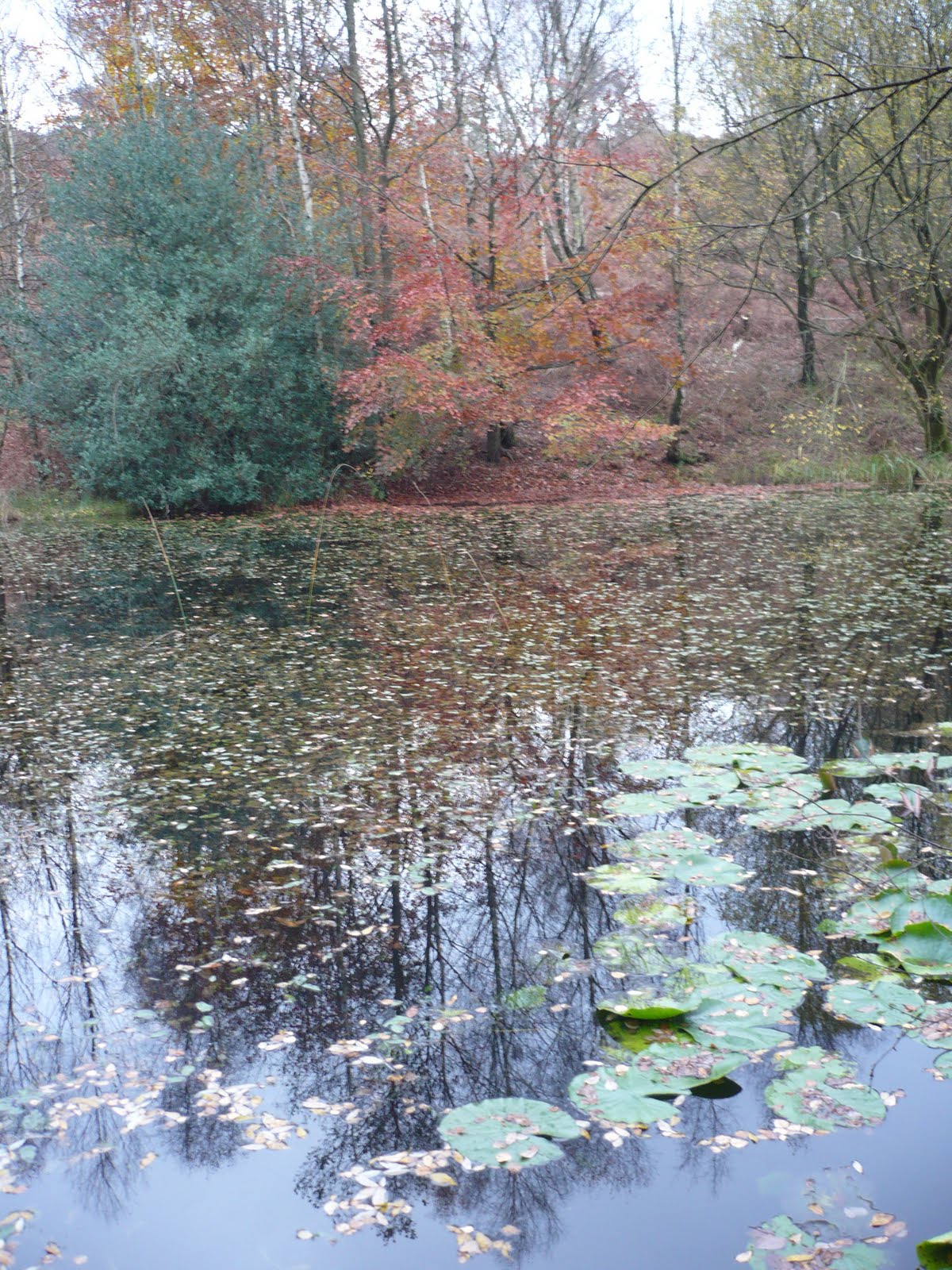 There are also a few large sheltered ponds surrounded by trees, wonderful for of all types of wildlife, and beautiful when the water lilies are in flower. For an overview of the species at Hay Bridge Nature Reserve see here
 But not all is wetness. If you walk on to the little mound only 125 ft above sea level where sits the Tissie Fooks memorial, and where you too can sit and contemplate, (the hills pointed out cannot be seen on this hazy day)
 the surrounding woods and pasture are all in view.
 Leaving the reserve behind us and walking on, the sheep at High Longmire stand to have their picture taken, the farm is hidden behind the trees. The valley has scatterings of farms and
 Kirkthwaite Cottage
 some with immaculate lawns
 and some with a river running by at the bottom.
 Here I end my tour at Rusland church. Our car was parked outside and the heavens opened as we walked then ran down the road, but I could not resist this photo of the light in the church door. Unfortunately as you can see the photo gods were not smiling on me as, unknown to me, I did not manage to keep the rain off the lens.
 Had a lovely walk in the Rusland Valley yesterday with the additional treat of coming across this blackthorn bush which was laded with sloes. It looks a very old bush as it is covered with moss and abundant grey lichen, which I think is the shrubby Ramalina farinacea. The lichen indicates good air quality round here and as it is near a place called Windy Hall this certainly indicates a lot of fresh air. I don't think last year was a good year for sloes as the ones we can across were poor specimens. This year they are plump. Plastic bag out and we gathered about a pound, which left loads left on the tree for anyone else with a desire to make Sloe Gin.
 The temperature this week can only be described a balmy, a wonderfully warm autumn. (This time last year it had snowed). The air was still and the breeze crackled the dry leaves on the trees as we walk through the woods. The birds sang and the sparse late flowers felt as though they were wishing us goodbye for the year.
 A profusion of Scarlet Hood (Hygrophorus coccineus) greeted us as we walked through the fields towards the end of the walk. These fungi like to grow in grass and the cap fades to yellow as it ages. You can just see the yellow edges on these ones.
 What of the sloes we picked. Today I bought a bottle of gin, pricked the juicy sloes, put them in the gin and added the sugar. Now I turn the bottle every day and wait. I knew someone who used to put the bottle under her bed and the last thing she did before she went to bed was turn it. One way of remembering to keep turning the bottle.


